
How Onsite Clearing and Offsite Hauling work during Snow Plowing Removal
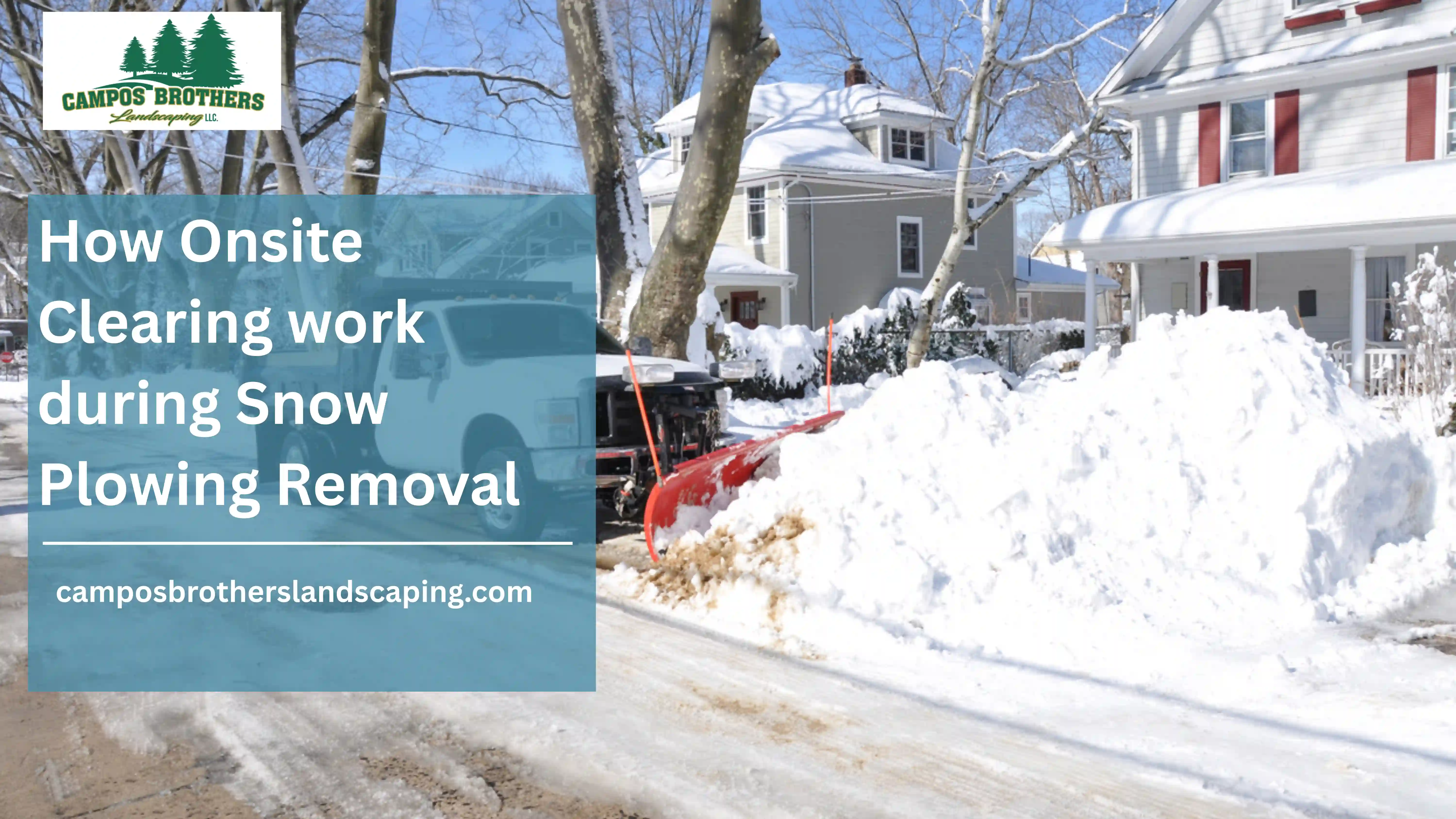
Driving over fresh snow packs the flakes down into a slick sheet of ice before morning. Once overnight temperatures drop, a standard shovel cannot scrape that frozen layer off the asphalt. Arranging snow plowing removal keeps driveways and walkways open through winter weather. From its office in Shrewsbury, Campos Brothers Landscaping provides 24/7 storm response across Massachusetts, handling onsite and offsite clearing alongside de-icing, salt, and sanding.
Plowing Snow Onsite versus Moving Heavy Piles Offsite
Most winter storms start with onsite plowing. A plow truck pushes fallen snow off the main driving lanes and stacks the pile along the edge of the yard or along the back border of the lot. On a wide property during a mild December, pushing snow to the perimeter leaves plenty of room for cars and foot traffic.
Back-to-back storms in January and February create a different problem. Once frozen snowbanks reach several feet high along the curb, the plow has nowhere left to push new accumulation. Tall piles narrow the driveway apron and block a driver's view of oncoming street traffic. On smaller residential lots or busy commercial properties, stacked snow also eats up needed parking spaces.
When a property runs out of stacking room, crews switch from onsite pushing to offsite removal. Workers move the heavy piles off the cramped lot so the next storm does not trap cars or bury walkways.
How 24/7 Storm Response keeps Driveways and Walkways open
Winter storms in Massachusetts rarely follow a nine-to-five schedule. Heavy snow often starts falling after midnight or builds up fast during the morning commute. Waiting until a long storm ends before clearing the driveway leaves deep, wet drifts that freeze solid as soon as the wind shifts. Town plows passing down the main road also push heavy walls of slush across the bottom of the driveway entrance.
Round-the-clock snow plowing removal means crews respond whenever winter weather hits. Small squalls and deep nor'easters both leave slick layers over asphalt and concrete steps. Clearing driveways and walkways promptly keeps the property open for everyday traffic.
De-Icing Management and When to use Salt versus Sand
A steel plow blade scrapes away loose snow, but a thin film of moisture always stays behind on the cold pavement. Left untreated, that damp film freezes into a hard glaze as soon as the sun goes down. Stopping slips and falls takes both de-icing management and weather-adjusted salt and sanding.
| Winter Weather Service | What the Crew Does | Why the Property Needs It |
|---|---|---|
| Onsite and Offsite Clearing | Plow trucks push snow to the yard border, or crews haul big piles off tight lots. | Keeps tall banks from blocking parking spots or the street entrance. |
| De-Icing Management | While snow is still falling, workers watch weather conditions and treat the pavement. | Wet blacktop will not freeze into a hard sheet of ice after dark. |
| Salt and Sanding | Salt melts thin ice on the drive, and coarse sand adds grit over slick spots. | Sloped driveways stay easier to walk and drive on during a deep freeze. |
Weather conditions outside decide how the crew treats the pavement after the plows finish. During snow plowing removal, workers watch the storm and put down de-icing agents to keep ice from bonding to the drive. Salt works by lowering the freezing point of water, which turns thin ice into loose slush.
When bitter cold moves in or freezing rain coats a sloped driveway, melting agents work more slowly on their own. Spreading coarse sand over the ice gives shoes and car tires immediate grit to grip the surface. Adjusting the mix of salt and sand to match the weather keeps front steps and parking lots safer to walk across.
Tailoring Winter Care to Fit each Property
Every driveway and commercial lot has its own layout challenges. A steep curving driveway needs different winter care than a flat storefront lot with long concrete sidewalks.
Tailoring the snow work to the property layout keeps stacked drifts away from front steps and garage doors. Crews serving Shrewsbury, Auburn, Grafton, Holden, Millbury, Northborough, Westborough, and Milford adjust plowing and de-icing to match the needs of each lot.
Frequently Asked Questions (F.A.Q.s):
Property owners lining up winter storm care often ask a few practical questions about plowing and ice control.
What is the difference between onsite snow plowing and offsite removal?
Onsite plowing pushes snow off the driveway or parking lot and stacks the pile at the edge of the yard. Offsite removal hauls stacked snow away from small or crowded properties when winter snowbanks run out of room.
Why do driveways still need de-icing after the plow truck finishes?
A heavy steel blade scrapes off deep drifts, yet a damp film always stays behind on cold blacktop. Putting down de-icer before nightfall keeps the wet layer from freezing into a slick sheet of ice.
When does a crew use sand instead of salt alone?
De-icing salt melts thin ice by lowering the freezing point of water. Extreme cold slows down the melting process, so workers spread coarse sand on top of the ice to give boots and tires immediate grip.
Does 24/7 storm service cover light snowfalls as well as major blizzards?
Crews stay on call around the clock for any winter weather event. Even a thin coat of snow can make a sloped driveway or front step slick, so trucks respond to small squalls and deep storms alike.
Why tailor snow clearing to a specific property?
Every driveway and parking lot has different slopes and pedestrian paths. Matching the plowing and sanding work to the lot keeps walkways open without blocking doors or sightlines.
Schedule Snow Plowing Removal with Campos Brothers Landscaping
Keeping a driveway or commercial lot safe through a Massachusetts winter takes steady storm monitoring and the right mix of plowing and ice control. When your property needs dependable snow plowing removal, the fully insured team at Campos Brothers Landscaping responds 24/7. Call the Shrewsbury office today to line up winter service for your home or business.